
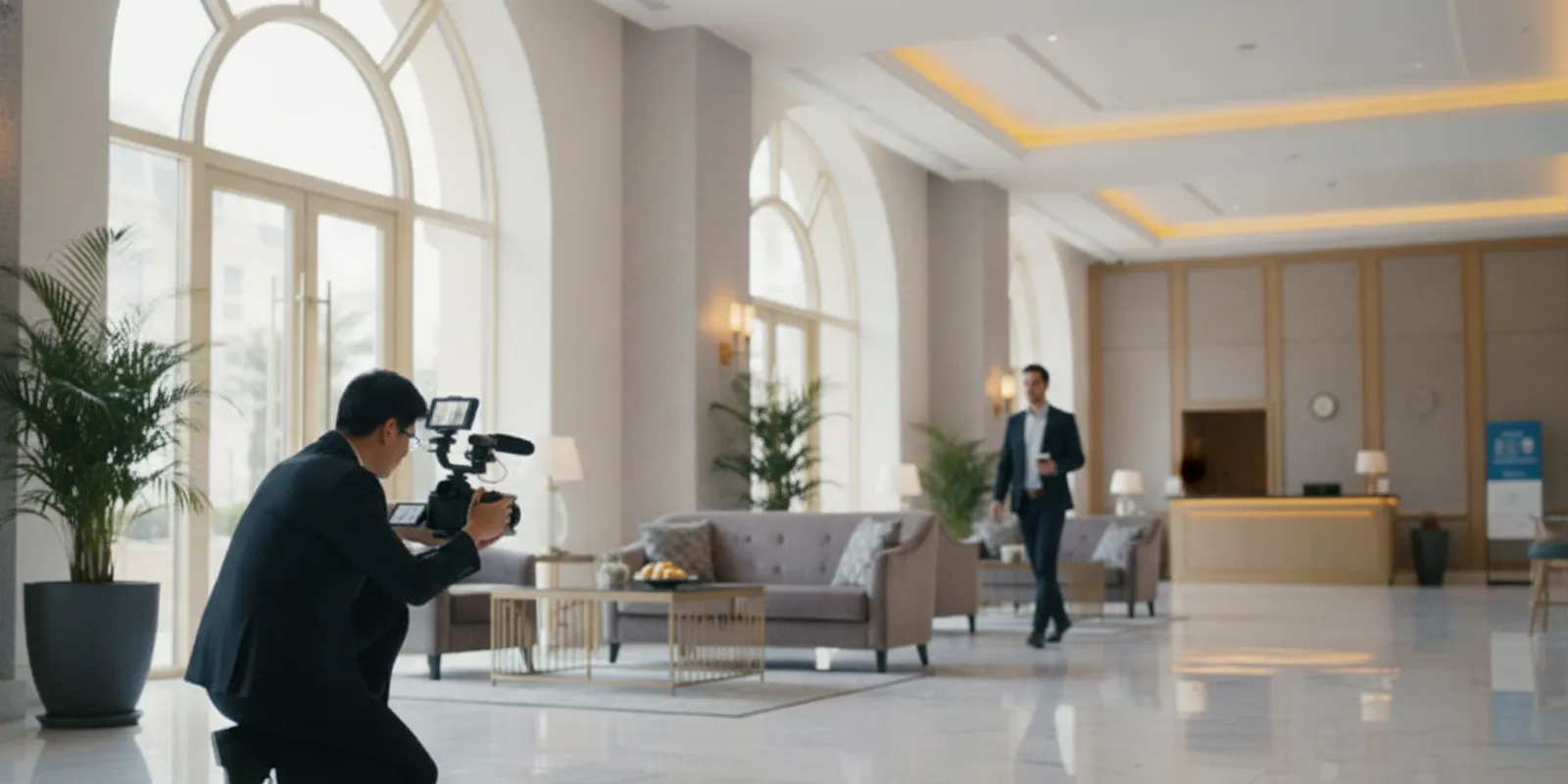
A hotel video services comparison should do more than list camera packages. It should help your team choose the right story, deliverables, production workflow, usage rights, and measurement plan for the guest experience you want to present. The best fit depends on whether you need a brand film, room and amenity coverage, social clips, booking-support content, or a practical combination.
Discuss your hotel video project
What should a hotel video services comparison help you decide?
A useful comparison helps a hotel marketing team answer five questions before signing a proposal:
- What business or guest-experience goal does the video support? A video may introduce the property, explain a distinctive service, show a room category, support an event, or create a steady stream of social content.
- What needs to be filmed? The scope may include guest rooms, suites, food and beverage spaces, amenities, exterior views, staff interactions, nearby attractions, or a complete property journey.
- What will be delivered? A single long-form film, several cutdowns, vertical social edits, still frames, raw footage, captions, and alternate versions all affect the value of the project.
- How will production be managed? Scheduling, property access, guest privacy, styling, talent, approvals, music, and post-production should be clear before the crew arrives.
- How will the team use and evaluate the work? A video built for a booking page has different dimensions, pacing, calls to action, and reporting needs than a short social asset.
Comparing these elements keeps a proposal from being judged only by the number of filming hours or the size of the crew. It also gives hotel leaders a practical way to compare unlike proposals. One provider may be strongest at a tightly planned property film, while another may offer a larger volume of social edits. The right question is not which proposal sounds biggest. It is which scope solves the stated communication problem with the least ambiguity.
Before requesting proposals, write a one-page decision brief. Include the property type, audience, priority dates, spaces to feature, intended channels, approval stakeholders, and the action you want viewers to take. Note whether the property is open, recently renovated, seasonal, operating under a new brand, or preparing for a specific event. This short document gives each provider the same starting point and makes the eventual comparison more useful.
Which type of hotel video do you need?
Start with the role the video must play. Hotels often need several kinds of content, but each type has a different planning logic. A proposal becomes easier to assess when it labels those roles rather than placing every asset under one general phrase such as âhotel video.â
Brand and experience films
A brand film presents the feeling of staying at the property. It may move from arrival to lobby, room, dining, wellness, pool, meeting space, and local surroundings. The emphasis is on atmosphere and a coherent guest journey rather than a complete inventory of every feature.
This format can be a strong fit when a hotel is repositioning, launching a renovation, opening a property, or improving the story told on its website. Ask how the production team will translate the hotel’s distinct experience into scenes, transitions, sound, and pacing. A useful treatment should identify a point of view. It might follow a leisure stay from check-in through dinner, or it might show how a meeting planner experiences the property from arrival to event close.
Do not evaluate a brand film only by whether it looks cinematic. Ask whether the story gives a viewer enough context to understand the property. A sequence of attractive details can create mood, but it may not show who the hotel serves, how the spaces connect, or why a guest should continue exploring.
Room and amenity videos
Room videos answer practical questions. They show layout, scale, light, finishes, views, and how spaces connect. Amenity videos can focus on the pool, spa, fitness area, restaurant, bar, rooftop, meeting facilities, or other features that influence a guest’s decision.
These videos need careful shot planning. A beautiful wide shot may introduce a room, but detail shots can help viewers understand the bed, bathroom, workspace, balcony, or view. Confirm whether the proposed scope covers enough room categories and whether the edits can be refreshed when spaces change.
Think about the information gap for each audience. A leisure traveler may want to see the relation between a room, pool, dining venue, and nearby activity. A meeting planner may care more about room configuration, entrances, staging, flow, and service. A wedding prospect may need an impression of ceremony, reception, guest arrival, and photography opportunities. The same property can require different shot lists for these audiences.
Social-first video content
Short videos for social channels should be planned for the way people watch them. Vertical framing, quick openings, captions, movement, and several variations may matter more than one polished two-minute edit. A social package can also include clips designed around dining, seasonal experiences, local recommendations, behind-the-scenes moments, or staff and guest interactions.
Do not assume that a long brand film will automatically produce effective social content. Ask whether the crew will capture dedicated vertical shots and whether the editor will create platform-ready versions rather than simply crop a horizontal master. A vertical edit may need a different subject position, opening beat, caption treatment, and ending than a landscape version.
Social-first does not mean careless or disposable. Define the visual boundaries before filming. Explain which brand colors, tone, music choices, guest-safety practices, and approval rules apply. If the hotel has a content calendar, use it to identify moments that need evergreen footage and moments that need a seasonal release.
Event, meeting, and destination videos
Hotels that sell meetings, weddings, conferences, or destination experiences may need footage that shows movement, capacity, service, and atmosphere. The brief should identify the audience and decision being supported. A wedding video, a convention-center walkthrough, and a destination story may all require different talent, permissions, schedules, and editing choices.
For events, define whether the goal is to document one occasion or show what the hotel can create for future clients. Documentation may prioritize candid coverage and a fast turnaround. A sales film may require planned room sets, detail shots, multiple configurations, and a clear explanation of what a prospective planner can expect.
Service, staff, and food-and-beverage stories
Some hotel videos need to make service visible. A welcome, a chef preparing a dish, a concierge recommendation, or a team setting a room can show care in a way an empty-space sequence cannot. These scenes should be planned with the operations team so that the activity looks natural and does not disrupt service.
Ask whether the provider will capture natural sound as well as images. Glassware, a lobby welcome, kitchen preparation, water near a pool, or the sound of a room being prepared can add texture. If the final edit will use music only, natural sound may still help the editor create transitions or more authentic moments.
How should you compare hotel video deliverables?
Deliverables are one of the clearest ways to compare proposals. Ask each provider to describe the final files in plain language. âFull video packageâ is not enough unless the proposal defines the number, length, orientation, resolution, caption treatment, and intended use of each file.
- Primary edit: Confirm the intended length, aspect ratio, resolution, captions, music, voiceover, and number of revision rounds.
- Short-form edits: Ask how many cutdowns are included, how long they are, and whether they are edited specifically for vertical viewing.
- Coverage by space: Request a list of rooms, amenities, exterior areas, service moments, and destination scenes included in filming.
- Stills and frame grabs: Clarify whether photography is part of the package or whether still images are only extracted from video.
- Raw footage: Confirm whether original footage is included, available for an additional fee, or retained by the production company.
- Captions and accessibility: Ask whether captions, transcripts, audio descriptions, or text-safe versions are part of the delivery plan.
- File organization: A useful handoff should identify file names, formats, dimensions, versions, and intended channels.
- Thumbnail and cover options: Determine whether the provider supplies selected stills or cover frames for the places where the video will appear.
- Project files: If your team expects to make future edits, ask whether editable project files, graphics, fonts, and linked media are part of the handoff.
- Audio versions: Confirm whether the edit is designed to work with sound on, muted autoplay, or both.
Two proposals may both promise a âhotel video,â yet one may provide one master edit while the other provides a reusable library of channel-specific assets. Neither is automatically better. The right choice depends on your content calendar, booking journey, internal editing capacity, and approval process.
Make a deliverables matrix before comparing prices. Put every proposed asset in one row and add columns for length, orientation, audience, channel, captions, review status, rights, and delivery date. Mark items as included, optional, or not proposed. This exposes a common source of confusion: one proposal may count five versions that are merely exports of one edit, while another may count five genuinely different cuts.
Also separate âcoverageâ from âfinished edits.â A provider can capture many spaces without promising a separate video for each one. If the hotel needs individual room-category pages, say so. If one experience film is enough, avoid paying for a large set of edits that the team will not maintain.
What production process should a hotel expect?
A reliable hotel video project is usually decided before the shoot day. Compare the process, not just the finished reel in a portfolio. The process should make responsibilities visible and show how the provider handles the realities of an operating property.
1. Discovery and brief development
The provider should learn what makes the hotel distinctive, who the intended guest is, which spaces matter, and where the final content will appear. This is also the time to identify seasonal considerations, renovation work, brand requirements, property rules, and any scenes that need special permission.
Ask for a written creative brief after discovery. It should state the audience, central message, visual tone, priority scenes, exclusions, deliverables, and approval owner. If the provider cannot explain the concept in a few clear sentences, the shoot may be trying to solve too many problems at once.
Discovery should include operational questions as well. Which spaces are available? Which areas are under maintenance? When is the lobby quiet enough for a moving shot? Does the restaurant need to be filmed before service? Are there restrictions on drones, tripods, lighting, or guest-facing equipment? Early answers protect the schedule.
2. Story and shot planning
A shot list should connect scenes to the guest experience. For example, an arrival sequence might require exterior footage, a welcome moment, lobby details, room entry, and a view from the property. A food-and-beverage sequence may need preparation, service, close details, and a finished setting.
Ask who approves the concept and shot list. A clear approval step reduces the risk of discovering after filming that a priority space or message was missed. The list should also identify the expected framing. A shot needed for a vertical reel may not be safe to crop from a wide landscape composition.
Review the shot list for balance. Include establishing views, medium actions, close details, transitions, people, and quiet breathing room. If every shot is a slow wide view, the editor may lack material for a fast social opening. If every shot is a detail, the viewer may lose a sense of place.
3. Scheduling and property preparation
Hotels are active environments. Guest traffic, housekeeping, events, weather, restaurant service, and daylight can all affect production. The plan should identify access windows, backup options, staff coordination, room preparation, styling, and any need for talent or stand-ins.
Build a schedule by light and activity, not only by floor. Exterior and twilight scenes may have narrow windows. A restaurant may look best before guests arrive, while a lobby may need natural movement to feel alive. A room may need to be cleaned, styled, and held for the crew. The production coordinator should show how these dependencies fit together.
If people appear on camera, clarify how releases and privacy will be handled. If guests may be visible in the background, establish a process for permissions and review. These details protect the property and keep post-production focused.
Prepare a property contact sheet with the hotel decision-maker, operations lead, facilities contact, food-and-beverage contact, and anyone managing talent or guest communications. Include arrival instructions, loading details, access credentials, parking, and emergency contacts. Small logistical gaps can cost more time than camera setup.
4. Filming
Compare how the crew will capture the property, not simply how many cameras will be used. Consider stabilized movement, tripod shots, aerial or exterior coverage when appropriate, natural sound, lighting, and the balance between polished scenes and authentic service moments.
For an upscale hotel, visual quality should support the experience without making the property feel artificial. Clean natural light, thoughtful staging, human presence, and carefully chosen twilight or exterior scenes can communicate more than a sequence of empty rooms.
Ask how the team will protect the property during filming. The answer may cover floor protection, cable management, lighting placement, guest flow, food handling, equipment storage, and restoration of each space. A professional production plan respects hotel operations as part of the assignment.
Ask whether the crew checks framing on the intended delivery formats while on site. A shot that looks complete on a cinema monitor may leave no room for captions or a vertical crop. Capturing a little more usable space can make later versioning easier, but it should be a deliberate choice rather than an accidental compromise.
5. Editing and approvals
Ask how many review rounds are included, who consolidates feedback, and how changes are tracked. A hotel may have several stakeholders across brand, operations, ownership, and marketing. One designated reviewer or a consolidated feedback process can prevent conflicting notes.
Confirm whether music licensing, color correction, sound mixing, captions, graphics, and voiceover are included. If the hotel has brand guidelines, ask how they will be applied to typography, color, tone, and logo use.
A useful review process has stages. The first review may focus on story and structure. The second may address wording, brand details, pacing, and technical corrections. Final approval should confirm that the correct music license, captions, logo treatment, and file versions are present. Asking stakeholders to debate every detail at every stage can delay launch.
6. Delivery and handoff
Delivery is part of the service, not an administrative afterthought. Ask whether files will be supplied through a shared folder, how long the folder will remain available, and whether the naming system identifies channel, aspect ratio, duration, and version.
Request a short handoff document. It can list each file, its intended use, rights notes, caption status, master approval date, and any renewal date for music or talent. This is especially useful when the person who managed production is not the person who later uploads the video.
How do usage rights affect the comparison?
Usage rights determine where and how the hotel can use the finished work. A proposal should explain the license in terms your team can apply.
- Channels: Check whether the license covers the website, organic social, paid social, email, presentations, sales materials, digital advertising, and booking partners.
- Territory: Confirm whether the rights are limited to a region or cover the markets where the hotel promotes itself.
- Duration: Some licenses have a defined term. Put renewal dates on the marketing calendar.
- Music and talent: Ask whether music, voiceover, actors, models, and other third-party elements have matching rights.
- Raw files and future edits: Determine whether the hotel can create new edits later or must return to the production provider.
- Property and brand changes: Ask what happens if ownership, management, branding, or the property name changes during the license term.
- Paid media rules: Confirm whether the same creative can be used in boosted posts and paid campaigns, and whether platform-specific restrictions apply.
Rights should match the campaign plan. A video intended only for an owned website may not have the same licensing needs as a video that will run in paid advertising for several years. Ask for exclusions in writing rather than assuming that payment for production grants unlimited use.
Rights also affect future flexibility. Suppose a hotel plans to create a 30-second social cut from a two-minute master next year. The team should know whether it can do that, whether the original music may be reused, and whether a new voiceover requires another permission. Clarifying those questions before filming is easier than renegotiating after the campaign is ready to launch.
Keep a rights register with the asset name, creator, music track, talent, license type, permitted channels, territory, expiration date, and responsible owner. This is a simple operational habit that prevents an old video from remaining active after a license ends.
How should you compare cost without reducing the decision to a day rate?
Hotel video pricing reflects more than the filming day. It can include creative development, crew size, equipment, travel, locations, talent, styling, editing, motion graphics, music, voiceover, licensing, revisions, and delivery versions.
When comparing costs, separate the proposal into:
- Pre-production: discovery, creative direction, scripting, storyboarding, shot lists, scheduling, and location planning.
- Production: crew, equipment, filming days, travel, lighting, aerial work, talent, and on-site coordination.
- Post-production: editing, sound, color, captions, graphics, voiceover, revisions, and versioning.
- Rights and extras: music licensing, raw footage, additional cutdowns, rush delivery, reshoots, and future usage.
A lower quote may reflect a narrower scope, fewer revisions, limited deliverables, or a shorter license. A higher quote may include a larger asset library or more production planning. Request comparable assumptions before deciding which proposal offers better value.
Look for cost triggers. Additional filming days, travel, talent, drone work, special lighting, voiceover, translation, rush editing, extra review rounds, and reshoots may sit outside the headline price. A transparent proposal does not have to predict every change, but it should identify the situations that could change the total.
Consider the cost of unused content as well. A large library may look efficient, but each extra deliverable creates review, storage, publishing, and maintenance work. If your team can realistically publish three short videos a month, a package built around 30 edits may not be the best fit unless the content will be reused across several properties or campaigns.
At the same time, avoid evaluating only the first launch. A well-planned shoot can create a bank of material for seasonal edits, room pages, sales presentations, and social posts. Ask how long the content is expected to remain useful and what may make it age quickly, such as a temporary promotion, a named staff member, a seasonal design, or a soon-to-change amenity.
For a property seeking a quote for visual work, you can also review Show My Property’s hotel visual marketing approach and ask which elements should be included in the brief.
How can a hotel create a fair proposal scorecard?
A scorecard can make a subjective decision more consistent. It should not replace judgment, but it can show why one proposal fits the brief better than another. Use the same categories for every provider and write notes that refer to the actual scope.
- Strategic fit: Does the provider understand the audience, property type, guest journey, and intended action?
- Creative fit: Does the proposed story feel appropriate to the hotel, or could it describe any property?
- Coverage: Are the priority spaces, experiences, people, and formats included?
- Production confidence: Is there a realistic plan for access, privacy, weather, operations, and backup options?
- Deliverable usefulness: Can the team publish the files in the channels it actually manages?
- Rights clarity: Are duration, territory, channels, music, talent, and future edits easy to understand?
- Review process: Are approval stages, revision limits, and stakeholder responsibilities defined?
- Handoff quality: Will the team receive organized files and enough information to use them later?
- Commercial fit: Does the complete cost match the available budget and the content’s expected service life?
Use a simple scale such as needs work, acceptable, strong, and exceptional. Record evidence for each score. âStrong portfolioâ is not enough evidence for production planning, and âlow priceâ is not enough evidence for value. The scorecard should help the decision-makers discuss gaps without turning the selection into a contest of adjectives.
Invite the finalists to respond to the same hypothetical. For example, ask how they would plan one day that includes a guest room, a restaurant, a pool, a meeting space, and exterior twilight footage. Their answer can reveal whether they think in terms of shots, light, access, audience, and edit structure. It also gives your team a more useful comparison than a generic capabilities presentation.
What should hotel video reporting measure?
Measurement should follow the role of the content. A booking-support video may be evaluated differently from a social awareness clip.
- Website content: Review views, engagement, assisted actions, and behavior on pages where the video appears. Connect the analysis to the page goal rather than treating views as the only outcome.
- Organic social: Compare watch time, completion, saves, shares, comments, profile actions, and audience response across formats.
- Paid campaigns: Examine reach, video plays, view rate, click-through activity, landing-page actions, and conversion signals while accounting for the campaign objective.
- Sales support: Track whether the asset is used in proposals, presentations, group-sales conversations, or internal training.
- Content operations: Track which versions are published, refreshed, or retired so the team can learn what the library is actually doing.
Reporting should identify the asset and channel being measured. Avoid treating a single account’s campaign statistic as a universal result. The useful question is whether the content is helping the intended audience take the next step and whether the team can learn from the result.
Set a baseline before launch when possible. Note the page’s existing behavior, the current social format, the campaign objective, and the period being compared. Keep changes in context: a new video may launch alongside a new offer, a redesign, a seasonal peak, or a paid campaign. A thoughtful report separates what was observed from what can reasonably be attributed to the video.
Agree on a review window. Early results can show whether the file plays correctly, loads acceptably, and holds attention. Later reviews can examine whether the asset continues to support inquiries, page engagement, sales conversations, or content consistency. The exact window depends on the channel and campaign, but the important point is to decide it before looking at results.
How should a hotel plan a shoot around the guest experience?
The property should feel active enough to communicate hospitality and controlled enough to look intentional. That balance requires coordination between marketing and operations.
Choose moments, not just locations
Instead of listing âlobby,â ârestaurant,â and âroom,â describe the moments each space should communicate. The lobby might show arrival and orientation. The restaurant might show a shared meal or a quiet morning. The room might show how a traveler settles in. This gives the crew an action and helps staff prepare the space.
Use people with a clear purpose
People can add scale, warmth, and movement, but they should not be placed in every shot without a reason. Decide whether the scene needs a traveler, a couple, a family, a meeting group, a staff member, or a background presence. Confirm wardrobe guidance and releases in advance.
Protect privacy and authenticity
Do not let the pursuit of a polished image create discomfort for guests or staff. Establish no-film areas, coordinate with front desk and housekeeping, and avoid showing identifiable information on screens, documents, room keys, or guest belongings. Let service moments look natural rather than asking employees to perform an unfamiliar routine.
Plan for weather and changing conditions
Exterior views, pools, rooftops, and destination scenes are vulnerable to weather and light. Create a priority list with primary and backup scenes. If the shoot has only one twilight window, schedule the most important exterior first and leave flexible detail work for later. A backup plan is more useful when it names specific alternative shots.
Leave time for resets
Rooms need to be restyled, food may need to be refreshed, and guests may move through a space unexpectedly. A schedule that fills every minute can look efficient on paper but leave no room for these realities. Ask the provider how much time is reserved for resets, travel within the property, and review of captured material.
How can you compare providers during a review call?
Use the same questions with every provider. This makes differences easier to see and exposes assumptions that may otherwise remain hidden.
- How would you turn our guest experience into a visual story?
- Which spaces and moments would you prioritize, and why?
- What would you film specifically for vertical social use?
- How many final edits and revision rounds are included?
- Who manages scheduling, property access, releases, and stakeholder feedback?
- Which rights are included for paid and organic distribution?
- What happens if weather, an event, or an unavailable room changes the schedule?
- How will the files be delivered and organized for future use?
- Which performance signals would you recommend tracking?
- What assumptions are behind the proposed filming days and crew size?
- Which parts of the proposal are optional, and what would be lost if they were removed?
- Can you show an example of a project that required multiple formats or stakeholder approvals?
Then compare the answers against your internal capacity. A hotel with a small marketing team may benefit from a provider that handles planning, versioning, and organized delivery. A larger team with an in-house editor may prefer a different mix of raw footage, masters, and project files.
Ask the provider to describe the first two weeks after approval. You should hear about brief confirmation, scheduling, access checks, shot-list approval, and preparation rather than an immediate promise to arrive with cameras. This answer shows whether the provider treats pre-production as part of the work.
What mistakes make a hotel video project harder to evaluate?
Choosing a format before defining the audience
A cinematic film may look impressive but still miss the needs of a meeting planner, leisure traveler, wedding prospect, or returning guest. Define the audience and action before choosing the format.
Assuming one edit works everywhere
Website, social, email, paid media, and sales presentations each create different viewing conditions. Plan the versions early if the content will serve several channels.
Leaving rights and revisions vague
Unclear terms can create delays when a team wants to launch a paid campaign, update music, or request a new cut. Put the license, approval process, and revision limits in the proposal.
Filming spaces without a guest-experience story
A catalog of rooms and amenities is not always a persuasive hotel story. Connect the scenes so viewers can imagine arrival, stay, service, and the moments that make the property distinct.
Overloading the shoot day
Trying to cover every room category, amenity, meal, service moment, staff scene, and destination view in one compressed schedule can reduce quality. Rank the must-have scenes, useful additions, and nice-to-have material. If the priority list cannot fit the proposed schedule, adjust the scope before approving it.
Approving a concept without checking operational reality
A creative treatment may depend on a quiet rooftop, a full restaurant, a particular weather condition, or a room category that is rarely vacant. Operations should review the concept before the shoot. A practical alternative is better than a late-stage omission.
Forgetting the handoff
A finished edit can still create work if files are unlabeled, captions are missing, rights are unclear, or no one knows which version is approved. Include delivery organization in the original comparison rather than treating it as a favor at the end.
What might four different hotel video scopes look like?
Illustrative scopes can help a team understand the trade-offs. These are planning examples, not fixed packages or universal prices.
Focused room and amenity refresh
This scope may suit a property that already has a strong brand film but needs updated material after a renovation. The brief could prioritize several room types, one or two amenities, selected details, and a small set of website and social edits. The comparison should focus on coverage accuracy, consistency with existing content, and the ability to update individual sections later.
The main risk is under-scoping. If the renovation changed the guest journey from arrival through room entry, a few replacement shots may not match the old film. Ask whether the new footage will stand alone, integrate with the existing edit, or require a broader visual refresh.
Property experience launch
This scope may suit a new or repositioned hotel. It could include discovery, a central story, exterior and interior coverage, service moments, a primary film, and several channel-specific edits. The key comparison points are concept quality, schedule management, talent and privacy planning, and whether the provider can create a coherent story rather than a collection of disconnected scenes.
The launch plan should include an approval calendar. Brand, ownership, operations, food and beverage, and sales teams may all need to review different aspects. Establish who has final authority and when feedback is due.
Ongoing social content library
This scope may suit a hotel that needs a regular stream of short content. The team might capture recurring themes such as dining, local experiences, staff, seasonal details, meetings, and rooms. The comparison should focus on the number of usable concepts, vertical capture, captioning, publishing cadence, approvals, and how quickly content can be refreshed.
The main risk is producing attractive clips without a publishing system. Define who chooses topics, writes captions, approves posts, stores files, and reports on performance. A smaller, organized library may be more useful than a large folder that no one can navigate.
Sales and meetings showcase
This scope may suit a property focused on group business, conferences, weddings, or retreats. It could emphasize room configurations, arrival, service, food and beverage, transitions between spaces, and the atmosphere of an event. The comparison should ask whether the provider understands the decision-maker and can show practical details as well as emotion.
Clarify whether the final film is meant to be watched by a planner during a sales conversation, embedded in a proposal, shown at a presentation, or distributed through social channels. Those uses may call for different lengths, captions, and calls to action.
How can a team turn the comparison into a production brief?
After reviewing options, convert the decision into a brief that the selected provider and internal team can both use. Start with one sentence describing the audience and desired next step. Then list the property story, priority spaces, required scenes, deliverables, channels, dates, rights, approval owners, and success signals.
Separate requirements from preferences. A requirement might be a vertical version, captioned delivery, or coverage of a particular room category. A preference might be a twilight exterior or a specific transition. This distinction helps the team make good decisions if weather, access, or timing changes.
Include a ânot in scopeâ section. It can state that certain rooms, paid distribution, translations, photography, raw footage, or future edits are excluded. Clear exclusions do not weaken a project. They prevent assumptions from appearing after filming begins.
Set a change process. If a stakeholder adds a new location or requests a different audience after the shot list is approved, decide who assesses the effect on schedule and cost. A change process protects both sides and keeps the creative work focused.
Finally, schedule a post-launch review. Ask which assets were used, which were difficult to publish, what questions viewers asked, and what the next production should capture. The comparison is not finished when the contract is signed. It should create a more informed next brief.
Frequently asked questions about hotel video services comparison
Should a hotel choose a brand film or several short videos?
Choose based on the job the content must perform. A brand film can establish the overall experience, while short videos create more flexible content for social, email, paid media, and specific rooms or amenities. Many teams benefit from planning both during one production, provided the shot list and budget support the additional versions.
Are hotel video services usually priced by the hour?
Not always. Proposals may account for pre-production, filming days, crew and equipment, editing, licensing, travel, revisions, and deliverables. Compare the complete scope and assumptions instead of comparing a single hourly or daily figure.
Do we need professional talent in hotel videos?
Not for every project. Staff, guests, or carefully selected talent can each support different stories. The decision should reflect the audience, brand guidelines, privacy requirements, and scenes needed. Confirm releases and usage rights before filming anyone who appears in the final work.
Can an existing hotel video be repurposed for social media?
Sometimes, but the result depends on how the original footage was framed, licensed, edited, and delivered. Ask whether the source material supports vertical crops, short openings, captions, and multiple versions. Dedicated social capture may produce a stronger result than repeatedly cropping one horizontal master.
What should be in the first conversation with a hotel video provider?
Bring the property goal, target audience, priority spaces, intended channels, launch date, brand guidelines, approval stakeholders, and known access or privacy limits. If you already have a content calendar, share it so the provider can recommend a useful mix of master edits and short-form assets.
How far in advance should a hotel plan a video shoot?
Allow enough time for discovery, concept approval, access planning, talent or release coordination, weather contingencies, filming, editing, and stakeholder review. The exact schedule depends on the scope and property calendar. A focused refresh may require less planning than a launch film with multiple audiences and versions, so ask each provider to show the dependencies in its proposed timeline.
Should a hotel request raw footage?
Request it when your team has a realistic plan to store, search, edit, and use it. Raw footage can support future work, but it also creates storage and rights responsibilities. Confirm whether the files are included, how they will be organized, and whether the music, talent, and other permissions extend to future edits.
What makes one hotel video proposal easier to trust than another?
A trustworthy proposal connects the audience to the story, the story to the shot list, the shot list to the schedule, and the schedule to specific deliverables. It also states rights, review rounds, assumptions, exclusions, and next steps clearly. A polished portfolio matters, but a transparent process makes the proposal easier to evaluate.
Explore hotel visual marketing services
The right hotel video partner should make the guest experience easier to understand, provide deliverables your team can use, and define the process and rights before production begins.