
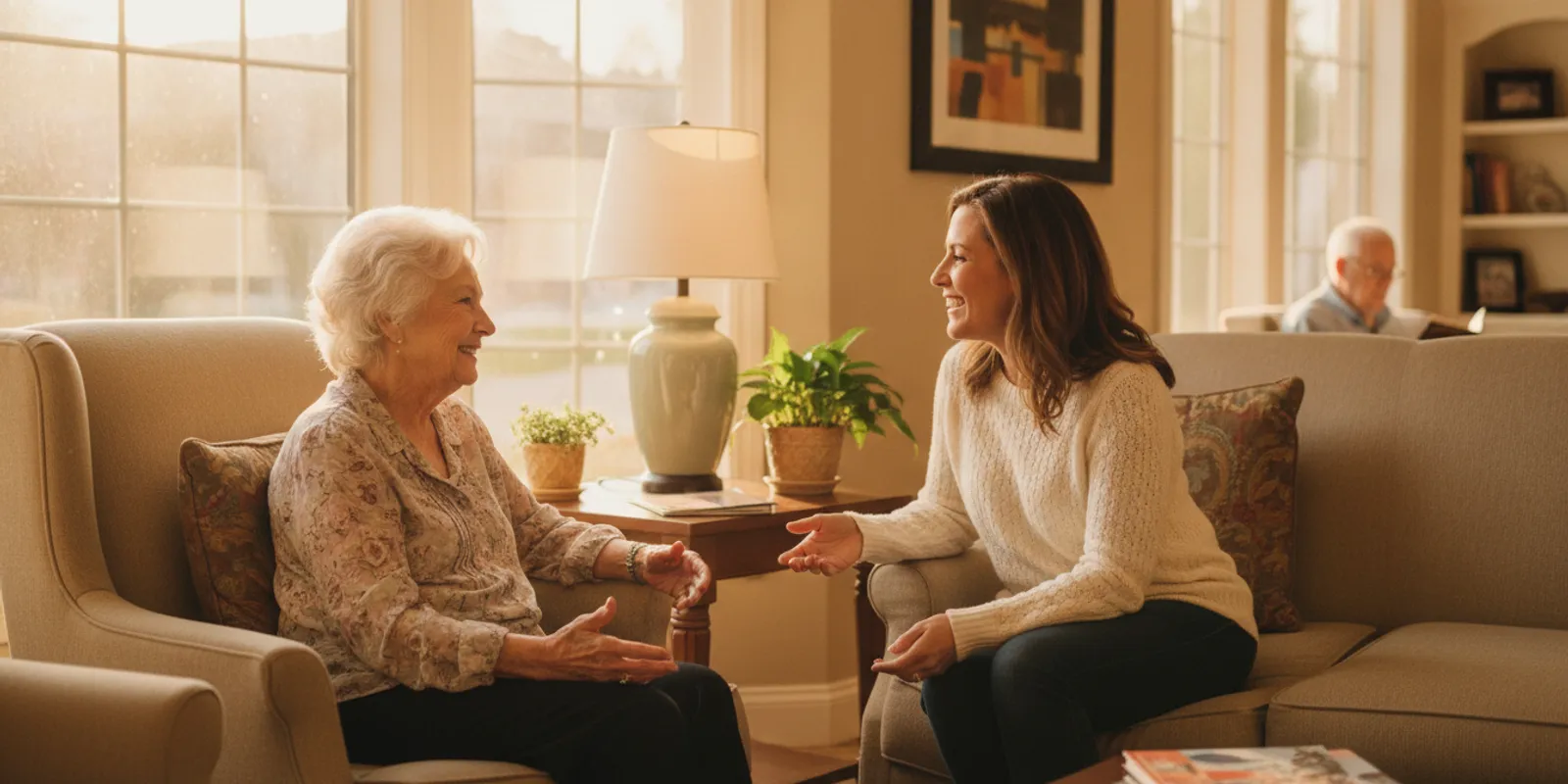
A useful senior living marketing case study does more than show attractive community images or repeat a success claim. It explains a real challenge, the audience questions behind it, the choices a team made, and what the available evidence can and cannot show. That structure helps prospective residents, families, and decision-makers assess whether the experience is relevant to their own situation.
Talk with Show My Property about your community
What should a senior living marketing case study help a reader decide?
Readers do not approach a senior living decision with one shared question. A prospective resident may want to picture daily life, understand how a move could affect familiar routines, or see whether the community feels welcoming. A family member may be looking for practical details, reassurance about communication, or a clear way to explore options together. An operator or marketing leader may be trying to understand whether a particular campaign process can be repeated, how work was coordinated, and what evidence supports the story.
A case study should give each reader enough context to judge the example without pretending that one property, campaign, or outcome represents every community. It is not a testimonial dressed up as a report. Nor is it a photo gallery with a few claims attached. It is a compact explanation of a specific situation and the decisions made in response.
Before drafting, write down the reader’s likely decision. For a prospective resident, it could be whether to request a visit or learn more. For a family member, it could be whether to start a conversation and what to ask. For a marketing director, it could be whether to use a similar content approach, how to scope a project, or what measurements to collect. These are different decisions. A single case study can serve more than one reader, but it should name its primary reader and make the supporting perspective clear.
This also gives the article a useful boundary. It can show how one team made its message clearer or arranged its materials around a specific audience question. It cannot establish that the same approach will produce the same response elsewhere. Outcomes may depend on property context, timing, staffing, offer, channel, audience, and many other factors. State what the example illustrates, not what it supposedly proves for every operator.
Why do resident and family questions need separate attention?
Residents and family members may take part in the same decision, but they do not necessarily experience it in the same way. A campaign that speaks only to adult children can make the older adult seem absent from their own story. A campaign that speaks only to residents can leave a family member without the practical context they need to participate in a conversation. A thoughtful case study identifies the people involved without flattening their different roles.
Start with questions rather than assumptions. Ask the community team which questions arise in calls, tours, email, or other conversations. Review approved materials and existing inquiries for repeated themes. Where it is appropriate and permitted, invite staff who speak with prospective residents and families to describe what people ask. Do not treat a handful of anecdotes as representative of every prospect. Label them as observations, and check that the wording is respectful and accurate.
Questions may concern everyday experience, the types of spaces available, how to learn more, or how to begin a conversation with the community. The exact questions depend on the property and the information it can support. Do not fill gaps with invented amenities, care offerings, prices, availability, policies, or promises. If a question cannot be answered from approved information, flag it for the community to resolve before the case study or campaign says anything about it.
It can help to organize questions into two columns during planning. One column is “what the resident wants to understand.” The other is “what a family member wants to understand.” Some questions will overlap. Others will be distinct. A third column can record the evidence or approved source needed to answer each one. This simple exercise helps the team avoid making family members the only audience, while also preventing a vague message that tries to speak to everyone at once.
Use language that gives residents agency. Show people participating in decisions and ordinary community life, rather than portraying them only as recipients of attention. If a specific individual appears in a photo, video, quotation, or story, confirm the permissions and review process before publication. Consent, privacy, dignity, and the community’s own policies should shape what is included. A case study should never pressure someone to share personal information or make a sensitive experience public.
How should you choose a project that can support a credible story?
Choose a project because it has a clear question and enough reliable material to explain what happened, not because its outcome sounds dramatic. A useful case can focus on a content refresh, a new set of community visuals, a campaign for a specific audience, or a change in how the team organized its communications. It does not need a spectacular result. A well-documented process can be more useful than a large but poorly explained number.
Check the project against a short set of tests:
- A defined situation: Can the team describe what was happening before the work began, without exaggeration?
- A specific audience: Is it clear whose questions or needs the work was intended to address?
- A traceable decision: Can the team explain why it chose the content, message, or channel it used?
- Evidence: Are there records that support the process and any reported results?
- Permission: Can the community approve the use of its name, images, quotes, and information?
- A bounded lesson: Can the reader see what may transfer to another project and what remains specific to this one?
If the project lacks a baseline or reliable records, that does not automatically rule it out. It does change what the story can say. The article may focus on the planning choices and the materials produced, while openly noting that the available records do not establish a measured effect. Do not retrofit a measurement after the fact or imply that a coincident change was caused by marketing.
A project is not a strong candidate simply because it has polished photography or a memorable slogan. Ask whether the work addresses a question that a prospective resident, family member, or peer operator actually needs answered. If the case does not clarify a decision, reveal a useful process, or make an audience experience easier to understand, it may be a portfolio item rather than a case study. Both can be valuable, but they serve different purposes.
What should you establish before work begins?
A case study is easiest to substantiate when the team decides in advance what it will document. Agree on the question, audience, time period, responsible people, sources of evidence, and approval process before creative work starts. A short written brief prevents the eventual story from depending on someone’s memory or a vague description of what the campaign was meant to do.
Set one primary objective in plain language. Examples of objective types include helping people understand a specific community experience, making an inquiry path easier to find, or producing a set of approved materials for a defined communication need. These are planning examples, not claims about results. If the objective is more than one thing, separate the primary goal from supporting goals so the evaluation does not shift after the work is complete.
Then specify the intended audience and the action or understanding that matters. “Reach more people” is too broad to guide a case study. A more workable brief might say that the team wants to explain a particular aspect of community life to prospective residents and their families, and make the next information step clear. The wording should reflect the community’s actual service and approved information, rather than a generalized assumption about older adults.
Record a baseline where the available systems make that possible. Note the measurement definition, source, date range, and any known limitations. If the team wants to discuss visits to a page, for example, clarify which page and what the analytics system counts as a visit. If it wants to discuss inquiries, define what qualifies as an inquiry and where it is recorded. Do not compare numbers from different systems or periods as if they were directly equivalent without explaining the difference.
Document the project timeline and the content that will be created or updated. List the channels actually in scope. Keep the plan realistic about what the team controls. A creative team may produce or organize content, while community staff may manage inquiries, tours, follow-up, or operational decisions. The case study should distinguish these roles rather than attribute every part of the prospect experience to one campaign.
How do you connect the content to real questions?
Build a simple question-to-content map before drafting messages or selecting visuals. For each audience question, write down the approved answer, the content that could make the answer easier to understand, the channel where that content will appear, and the next step the reader can take. The map becomes a practical bridge between audience research and creative execution.
For example, if prospective residents want to understand the feeling of a shared space, a set of accurate, current images or a short visual walkthrough may help them picture it. If a family member needs to know how to request more information, a clear contact path may matter more than another lifestyle image. If the question is about a policy or service detail, a visual asset may not be the right answer at all; the community’s approved written information or a direct conversation may be more appropriate.
That distinction keeps the case study from treating visuals as a substitute for facts. Photography, video, floor plans, and renderings can help explain a place or experience when they are accurate and clearly labeled. They cannot establish details that the community has not confirmed. If a rendering depicts a planned space rather than a completed one, identify it as a rendering. If a photograph is staged or representative rather than a record of a particular resident’s everyday experience, do not imply otherwise.
Choose a small number of content pieces that each have a defined role. A group of unrelated images does not become a strategy simply because it shares a color palette. A useful set might include a community overview, a closer look at a space, a resident-centered moment that has appropriate permission, and a clear route to learn more. The exact mix depends on the question and available source material. Explain why each item belongs in the case study.
Plan for accessibility and readability as part of the work, not as a last-minute addition. Use concise copy, descriptive alternative text for meaningful images, clear headings, and legible contrast. Avoid small text embedded in images as the only way to communicate important information. If video is used, consider captions and whether the core message remains understandable without sound. These practices make content easier to use across different situations and devices.
How can you show the process without turning it into a sales pitch?
Describe the work in a sequence a reader can follow. Begin with what the team learned, then explain how it translated those observations into a brief, what assets or messages it selected, how the work was reviewed, and how it was put into use. Include the people or roles involved when approved. Specific process details make the story understandable; broad adjectives such as “seamless,” “innovative,” or “transformative” do not.
Be honest about revisions. If the first concept missed an important audience need, say what the team changed and why, if that information can be shared. If approvals took time or assets had to be updated, describe the relevant constraint without blaming individuals. An account of the decision-making process can help another team plan its own work more realistically.
Separate deliverables from impact. A number of assets created, posts prepared, or project steps completed describes output. It does not, by itself, show whether readers understood the message, took an action, or changed a decision. When a case study includes both kinds of information, label them clearly. This distinction prevents a production count from being presented as evidence of audience response.
Show the actual work where permissions allow. A representative image, excerpt, or campaign example can help readers see the choices described in the text. Add a caption that explains what the item was intended to do and whether it is a final asset, a draft, a rendering, or an illustrative example. If a real feed or campaign is shown, verify that the account and material belong to the project and that sensitive details are not exposed.
A brief process narrative can be more credible than a polished success story with missing context. Identify the challenge, the constraint, the decision, and the tradeoff. Perhaps the team prioritized answering a recurring question over adding more general promotional language. Perhaps it used existing approved images because new photography was not part of the scope. Those details help the reader understand what was possible within the project, provided they are true to the record.
Which measures belong in the results section?
Choose measures that correspond to the objective and can be defined consistently. A case study should not list every number available merely to look comprehensive. It should explain what was measured, where the data came from, the period covered, what comparison is being made, and what other factors may have influenced the result.
Depending on the project, teams may review content delivery, reach or views, engagement actions, visits to a relevant page, completed inquiry forms, calls, or other recorded steps. These are possible measurement categories, not findings or promises. Select only measures that fit the case and that the community can access and interpret. A metric that cannot be reliably tied to the project should not be presented as an outcome.
Distinguish leading indicators from business outcomes. A person viewing a video is not the same as a person making an inquiry. An inquiry is not automatically a qualified prospect, a tour, or a move-in. If the case includes multiple stages, explain how each stage is defined and whether records connect them. When systems do not make that connection, say so rather than implying a continuous path that has not been verified.
Use a measurement note beside every important result. State the source and dates, and clarify whether the figure reflects one channel, one property, one campaign, or a broader set of activity. If the information is directional, label it that way. If the team cannot confidently attribute a change to the content, avoid causal phrasing such as “the campaign drove” or “the video generated.” Instead, report what was observed and what remains unknown.
Context matters when comparing periods. Note whether the audience, budget, placement, season, offer, staffing, or tracking method changed, if those details are available and relevant. A before-and-after comparison can be informative, but it does not isolate the effect of one creative decision by itself. If no comparable baseline exists, the report can still describe delivery and process, then recommend a better measurement plan for the next project.
Do not invent a benchmark to make a result sound impressive. If the organization has an approved internal comparison, explain what it compares and who established it. If not, report the actual figures with their limitations or omit them. A reader benefits more from an honest account than from a percentage without a denominator, an unclear reporting period, or an unexplained source.
How should you protect privacy, accuracy, and dignity?
Senior living stories can involve personal images, names, quotes, and details about someone’s life. The case study should use only material the community is authorized to share and that the people depicted have approved under the applicable permission process. Confirm permissions for the intended channels and use. A permission for one context should not be assumed to cover every future use.
Give participants a clear understanding of what will be shared and where it may appear. Avoid suggesting that access, care, housing, or other services depend on participation. Do not pressure residents or relatives to provide praise, a personal story, or a photograph. If a quote is edited for length or clarity, preserve its meaning and follow the agreed approval process. If permission is uncertain, leave the material out.
Accuracy applies to visuals as well as copy. Confirm that images show the community or setting described. Check dates and status for spaces that are under construction, newly updated, or no longer available. Do not use an image of one property to imply that it depicts another. Do not present a planned or digitally rendered space as an existing amenity. The context should be clear enough that a reader does not have to guess.
Review language for respect and agency. Avoid portraying older adults as a single, interchangeable audience or reducing them to a problem for family members to solve. Ask whether the person shown is treated as an active participant. Check whether a sentence describes a confirmed fact or relies on an assumption about age, ability, family structure, health, or preferences. When in doubt, use specific verified information or remove the claim.
Finally, establish a review chain. The community should confirm details about its setting, services, policies, and people. The marketing team should confirm that the content and measurements match the records. Any external partner should follow the agreed approval process and avoid publishing unapproved material. Keep a record of the final version and the permissions that support it.
What might a practical case study look like?
The following is a hypothetical planning example, not a report about a real community, customer, campaign, or result. It demonstrates how to organize a case without inventing performance data.
Situation
Imagine a senior living community preparing to explain its shared spaces and everyday resident experience to people who are beginning to explore options. Staff hear that prospective residents and family members want different kinds of information. The team has approved images, but its current materials do not clearly connect a visual introduction to a next step for questions.
Question and objective
The team writes a central question: can the materials make it easier for a reader to understand what the community wants to show and where to ask for verified details? The objective is to present the approved spaces and explain how to request more information. It does not promise a particular volume of inquiries or imply that a marketing asset can resolve every decision.
Planning choices
The team reviews the questions it has permission to use, confirms which statements are approved, and maps each question to a suitable information source. It selects current images of the spaces being discussed and checks that captions do not imply availability or services that have not been confirmed. It gives residents and family members separate paths through the information where their questions differ, while keeping the community’s contact route clear.
Execution and review
The draft materials are reviewed by the community for accuracy, by the marketing lead for audience fit, and by the people responsible for permissions. The team adjusts unclear wording and removes an image whose context could be misunderstood. The case study would explain these revisions only if they reflect the actual project record; in this hypothetical example, they illustrate the kind of process detail worth documenting.
Evaluation
Before publishing, the team agrees which delivery and response measures it can reliably access, how it will define them, and what dates it will compare. If the measurement system cannot connect content exposure to later inquiries, the report says so. The final case could then show what was produced, how it was presented, and what was observed in the available records without claiming that the content caused an outcome the data cannot demonstrate.
Transferable lesson
The useful lesson is not “use these images and the same result will follow.” It is to begin with real questions, connect each question to approved information, make the next step understandable, and agree on measurement before the work launches. Another community can adapt that process while checking its own audience, resources, permissions, and information.
How can you tell the story without overstating results?
Use language that matches the evidence. “The team created a set of updated materials” describes a deliverable. “The materials were associated with more page visits during the reported period” describes an observed relationship, if the data supports it. “The materials caused more tours” makes a stronger causal claim and requires evidence that the case may not have. Choose the narrowest accurate wording.
Give readers a concise methodology note. It can state the reporting window, data source, definition, and known caveat. If numbers are omitted because the records are incomplete, explain that the case focuses on planning and execution rather than measured impact. This does not weaken the story. It shows that the team understands the limits of what it knows.
Use quotes sparingly and with attribution only when permission is secured. A quote should add a perspective that the rest of the article cannot convey, not substitute for evidence. Do not combine different statements into a polished quotation or imply that one person speaks for all residents or families. If the story is anonymized, confirm that the description does not still identify a person or community without approval.
Avoid absolute descriptions such as “every family,” “the perfect solution,” or “always.” They are rarely necessary to explain a project and may imply more than the record supports. A strong case study can acknowledge a limitation: the project had a defined scope, the measurement period was short, or the available data did not connect one step to another. State the limitation in ordinary language, then explain what the team would measure or clarify next time.
How do you structure the finished article?
A clear case study can follow a predictable sequence without reading like a form. Use a headline that names the context and the central question. Open with a brief summary of the situation, the audience, and what the reader will learn. Do not begin with a large result unless the evidence is already clear and well qualified.
- Context: Describe the community or project only to the level approved for publication. Explain the relevant setting and constraint.
- Audience question: Identify whose question the work addressed and how the team learned about it.
- Objective: State what the project intended to make clearer or easier. Separate that aim from the results.
- Approach: Explain the content choices, channels, roles, review steps, and reasons behind them.
- Evidence: Present only supported measures, with dates, definitions, sources, and limitations.
- Learning: Explain what the team would keep, change, or investigate further.
- Next step: Offer a relevant way for the reader to learn more, without implying the example guarantees a similar outcome.
Use descriptive subheadings so readers can find the part they need. Keep paragraphs focused. Explain specialized measurement terms the first time they appear. Captions should tell readers what an image shows and why it is included. If the case contains a visual example, do not let that example carry a claim that the text cannot support.
For a practical reference to the customer’s senior living content, readers can explore Show My Property’s senior living examples. A project-specific conversation can help clarify what materials and scope would fit a particular community. The story itself should remain useful even to someone who is not ready to contact a provider.
What mistakes make a senior living case study less useful?
- Starting with a claim instead of a question. A bold outcome may attract attention, but without a clear audience problem and context the reader cannot judge its relevance.
- Speaking only to family members. This can erase the resident’s perspective. Include both perspectives when they are relevant, and avoid assuming they are identical.
- Using a hypothetical scenario as a real result. Label illustrative examples plainly. Never add invented client names, quotes, numbers, or campaign details to make a story feel concrete.
- Confusing production with impact. A completed asset or published post is an output. It is not evidence of an inquiry, tour, or move-in.
- Leaving out the measurement method. A number without a period, source, definition, or comparison gives the reader little basis for interpretation.
- Making broad causal claims. Timing alone does not prove that one campaign caused a change. Use wording that reflects the available evidence.
- Using generic lifestyle imagery as proof. A beautiful picture may set a mood, but it does not establish the features or experience of the community described.
- Hiding the scope. Readers need to know what work was included and what was outside it. Do not imply that every channel or operational step was part of the project.
- Omitting constraints. Mention relevant limits, such as incomplete tracking or a narrow reporting period, when they affect the interpretation.
- Letting a sales message take over. A next step is helpful, but the case study should first answer the reader’s question with enough detail to stand on its own.
What should a team ask before approving publication?
Use a final review that checks the story from the resident’s perspective, the family member’s perspective, and the operator’s perspective. The questions below are meant to surface gaps before an article goes live, not to force every case into the same claims.
- Can a reader identify the specific situation and the intended audience?
- Does the case distinguish what the team wanted to happen from what the records show happened?
- Are all figures defined, dated, sourced, and described at the correct scope?
- Can each factual statement about the community be traced to an approved source?
- Do images depict the community and context claimed, and are renderings or illustrative assets labeled?
- Are names, photographs, quotations, and personal details covered by the necessary permissions?
- Does the story treat residents as people with agency, rather than as props or a single audience type?
- Are limitations and unknowns explained wherever they affect the reader’s interpretation?
- Does the article offer a clear next step without promising a result?
If an answer is no, revise the story or narrow its claims. It is better to publish a careful account of the process than to fill a gap with an assumption. Keep the supporting records and approvals together so a future update can be checked against the original evidence.
How can you gather useful input before writing?
Gathering input does not require a large research program, but it does require discipline about what the input represents. Begin with the people closest to the work: community staff who answer questions, marketing staff who manage approved materials, and anyone responsible for tracking inquiries. Ask them to point to records or examples rather than relying only on memory. If residents or relatives are invited to share input, explain the purpose, use a voluntary process, and follow the community’s consent and privacy requirements.
Use open questions that invite specific examples. Ask staff which questions appear repeatedly, what information is hardest to explain, where they direct people for an answer, and what tends to be misunderstood. Ask what they do not know as well. A useful interview can reveal a gap in available information, but the case study must not turn one person’s impression into a universal claim about residents or families.
When reviewing existing communications, record the material, date, channel, and audience it was intended for. Look for duplicated answers, outdated details, unclear next steps, and places where an image could be mistaken for a promise. This is a content review, not proof that a reader interpreted the material in a particular way. Reader understanding requires suitable feedback or other evidence, and the method should be described if it informs the case.
Keep a simple evidence log. For each statement you may want to publish, note its source, the person who can approve it, and whether it is a fact, an observation, an interpretation, or a result. For example, “staff reported repeated questions about the common areas” is an attributed observation if staff confirm it. “Families cannot find information” is a broader claim and needs stronger evidence. Sorting statements this way early makes review faster and reduces the temptation to turn anecdote into fact.
How can the team organize the work from brief to publication?
A short workflow gives the case study a reliable paper trail. The sequence below can be scaled to a small content refresh or a larger campaign, but it should not be treated as a rigid formula. Assign an owner for each decision and set review dates that leave room to verify details.
- Frame the question. Write the audience, the question they need answered, and the decision the content should support. Remove objectives that are not in scope.
- Confirm facts and permissions. Gather approved community information, current visual assets, relevant usage permissions, and any necessary restrictions before concepts are developed.
- Map the content. Connect each audience question to a verified answer, content format, channel, and next step. Mark questions that need more information instead of guessing.
- Agree on measurement. Define what can be tracked, where records live, who can access them, and how the time period will be set. Record what cannot be measured.
- Draft and produce. Create materials within the agreed scope. Keep drafts labeled and track feedback so revisions do not lose the original objective.
- Review in context. Check copy, imagery, captions, links, and the destination a reader reaches. Confirm that each item is accurate on the device and channel where it will appear.
- Document what happened. Save final materials, dates, approvals, and available measures. Note meaningful changes in scope or timing.
- Write and verify the case. Build the narrative from the record, then ask a reviewer who was not involved in drafting to challenge every result and causal statement.
Keep the brief and the case study connected. If the objective changes during the work, record why and identify which objective the results address. Otherwise, teams may judge the project against a goal that was introduced only after the outcome was visible. A clear change log lets readers understand the project as it actually unfolded.
How do you make the next step useful to the reader?
A case study should not end by asking every reader to take the same action. A prospective resident may want to explore a community or ask a personal question. A family member may want a contact path or approved information to discuss together. A marketing professional may want to understand project scope, workflow, or creative options. A next step should fit the audience and be consistent with the page or resource it links to.
Make the action specific. “Learn more” can work when the destination clearly explains what comes next, but a reader should not have to guess whether a link opens a service overview, a contact form, or a general page. The case should not imply that a marketing inquiry is the same as a community inquiry. If the purpose is to discuss content production, say so; if the reader needs property information, point them to the community’s approved channel.
Check the path before publication. Follow each link, verify that the destination is current, and confirm that the page answers the expectation set by the link text. Review the mobile experience and any form fields relevant to the request. A good article cannot compensate for a broken or confusing destination, and a clear next step is part of the reader experience described in the case.
After publication, review the case at a reasonable interval rather than leaving it unattended. Confirm that the community details remain accurate, the links still work, and images and permissions remain appropriate for continued use. If new evidence becomes available, add it with its actual date and source; do not rewrite historical results as if they were collected during the original campaign. A documented update preserves both usefulness and accuracy.
Frequently asked questions
What makes a senior living marketing case study credible?
A credible case study states the context, audience, objective, process, and evidence. It defines its measurements, identifies limitations, respects privacy, and separates observed results from claims about causation. It also makes clear whether an example is real or hypothetical.
Should a case study focus on residents or families?
Choose the primary reader based on the project question, but do not assume that residents and family members have the same concerns. Include both perspectives when they are relevant, and explain how the content responds to each. The community should validate any claims about its audience.
Can a case study be useful if it has no performance data?
Yes. It can document the challenge, audience research, creative decisions, approvals, and practical lessons. Be direct that measured impact is unavailable or inconclusive. Do not manufacture a result to make the story appear complete.
What results should the article include?
Include only measures that relate to the stated objective and can be defined and supported. Explain the source, period, scope, and comparison. Distinguish content delivery or engagement from inquiries, visits, and other later actions.
How often should a case study be updated?
Review it when the underlying information, assets, permissions, or measurement context changes, and whenever the community needs to confirm that the story remains accurate. An old result should retain its original date range rather than appearing current by default.
Discuss a senior living content project
A well-made case study gives prospective residents, families, and community teams a clear account of what was asked, what was done, and what can reasonably be learned from it. When the evidence has limits, naming them is part of telling the story well.